
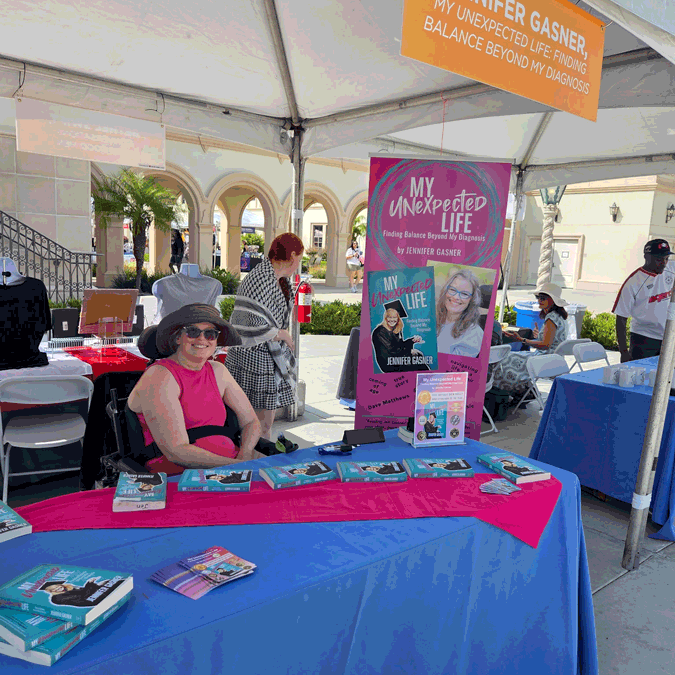
It’s been almost 2 years now since I’ve been attending Book events and my recent appearance at the San Diego Book Festival reminded me how frustrating these events can be.
Attending book events as an author is supposed to be an exciting opportunity to connect with readers, share your work, and celebrate the written word. But I often feel isolated instead. As a wheelchair user, I’ve noticed a recurring pattern at these events: people seem hesitant to approach me. My table doesn’t get as much traffic as others, and I can’t help but wonder—why?
Is it because I need to improve my setup? Do I need more eye-catching displays, better signage, or a more enticing pitch to draw people in? Or is it something deeper? Are people uncomfortable with my disability, unsure of how to interact with me, or simply apprehensive about starting a conversation? Or even if they do try, does the cadence of my voice distract them enough to think my writing cannot be good. Hell, they might not even need me to say a word to assume I can’t write.
These questions have been swirling in my mind for a while now, and I think it’s time to unpack them.
### The Elephant in the Room: Disability and Social Stigma
Let’s address the obvious: society still has a long way to go when it comes to understanding and normalizing disability. Many people don’t know how to act around someone with a visible disability, like me. They might worry about saying the wrong thing or unintentionally offending, so they choose to avoid interaction altogether. While their intentions may not be malicious, the result is the same—exclusion.
At book events, this dynamic can feel especially pronounced. These gatherings are meant to foster connection, yet I often find myself sitting at my table, watching people walk by without stopping. It’s hard not to take it personally. Are they avoiding me because of my wheelchair? Do they assume I’m unapproachable? Or is it something else entirely?
### The Power of Presentation
Of course, it’s also possible that my table setup could use some work. Book events are competitive spaces, with authors vying for attention in a sea of colorful banners, creative displays, and free swag. Maybe I need to step up my game. Could a more visually appealing table or a clever hook draw people in, regardless of their initial apprehensions?
I’ve started brainstorming ways to make my booth more inviting. Maybe I could offer a small giveaway, like bookmarks or stickers, to entice people to stop by. Or I could create a display that tells a story about my journey as an author, showing that my wheelchair is just one part of who I am—not the whole story.
### Breaking Down Barriers
Still, I can’t ignore the possibility that some people’s discomfort stems from the myriad of misunderstandings and biases about disability; in fact, I feel like that has more to do with people ignoring me than anything else. If that’s the case, then maybe part of my role as an author is to help break down those barriers. I want people to see me as approachable, open, and ready to engage—not as someone to tiptoe around.
One idea I’ve been toying with is adding a personal touch to my booth. What if I included a sign that says something like, “Come say hi! I’d love to chat about books, writing, and everything in between.” A friendly invitation like this might help ease any apprehension and encourage people to strike up a conversation.
### Turning Frustration into Action
I won’t lie—feeling overlooked at book events is frustrating–and to be honest I’m not sure how many more events I want to do at this point. But I would like to channel my frustrations into action. I hope to create a space that’s not only welcoming but also impossible to ignore. After all my book is about educating people about disability and hopefully shifting their perspectives, I hope my presence at book event helps.
To my fellow authors and event-goers: if you see someone at a booth who seems to be getting less traffic, take a moment to stop by. Say hello, ask about their work, and show genuine interest. You never know what kind of connection you might make—or what incredible stories you might discover.
And to anyone who’s ever felt overlooked or underestimated because of a disability: you’re not alone. Keep showing up, keep sharing your voice, and keep creating. The world needs your stories, and there are people out there who are ready to listen—you just have to find them.
### Final Thoughts
Book events should be a celebration of creativity and connection, not a place where anyone feels invisible. By addressing the challenges head-on and finding ways to bridge the gap, I’m hopeful that future events will feel more inclusive—not just for me, but for everyone.
So, here’s to breaking the silence, challenging assumptions, and making space for all voices in the literary world. Because at the end of the day, that’s what storytelling is all about.
Recent Comments